top of page

ACCESSORY STRUCTURES

                  Sweat Glands

-Sweat cools the body
-Merocrine glands
       *Sweat glands that stretch from the epidermis into the dermis
-Eccrine glands
       *Produces hypotonic sweat 
             -Made mostly of water
             -Some salt, antibodies, metabolic waste, and dermicidin, an antimicrobial peptide
             -Assists in thermoregulation
        *A lot on the palms, forehead, and the soles of the feet
        *Coiled glands in the dermis
-Apocrine glands
*With hair follicles in hairy areas (armpits and genitials)
*Larger than eccrine
*May be in the hypodermis
*Organic compounds in sweat, making it thicker than eccrine's
 -Smells bad
 -Under hormonal and stress control
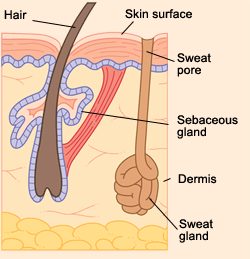
             Sebaceous Glands

-Oil gland found all over the body
-Lubricate skin and hair
-Associated with hair follicles
-Fatty acids in sebum
       *Have antibacterial properties
       *Prevent water loss
-Mostly inactive until puberty
 

"Chapter 5: The Integumentary System - Biology 240a with Jabbs at Southern Illinois University - Edwardsville - StudyBlue." StudyBlue. StudyBlue Inc., 2015. Web. 27 Oct. 2015.

"Fingernail Anatomy." Diagram Picture RSS. 2013. Web. 29 Oct. 2015.

"Georgia Dermatology Announcement - EMetro Times." EMetro Times. 14 May 2014. Web. 29 Oct. 2015.

"Hair-follicle-diagram." Health Medicine and Anatomy Reference Pictures RSS. Web. 29 Oct. 2015.

"Integumentary." ANAT D502 – Basic Histology. Web. 29 Oct. 2015.

"Label the Diagram for Chapter 18." Interactive Image. Web. 29 Oct. 2015.

Ownby, Charllote. "The Integument- the Skin and All of Its Derivatives." Web. 27 Oct. 2015.

Sweat." : About Glands. Web. 29 Oct. 2015.

"The Integumentary System." Anatomy & Physiology. Housten: Openstax College. 171-202. Print.

© 2023 by Ryan Medina. Proudly created with Wix.com

bottom of page